
Should I Stay or Should I Go? What the Gottman Method Can Teach Us About Relationships

“Should I stay or should I go?” is not just a famous song lyric that plays in your mind.
Many couples find themselves wondering: Who did I marry? Is it me or is it them? Why do I feel so disconnected from my partner? Does he or she even love me? Is it time to call it quits?
Do these thoughts repeat in your mind or sound familiar?
Relationships can feel confusing, especially when you love your partner but also feel disconnected, frustrated, or stuck in the same patterns. Sometimes couples assume that if they are struggling, something must be wrong with the relationship.
That is where the work of John and Julie Gottman can be helpful.
Who Are John and Julie Gottman?
John and Julie Gottman have spent decades studying relationships and what helps couples stay connected over time. Their work looks closely at the patterns that strengthen relationships, as well as the patterns that can create distance and distress.
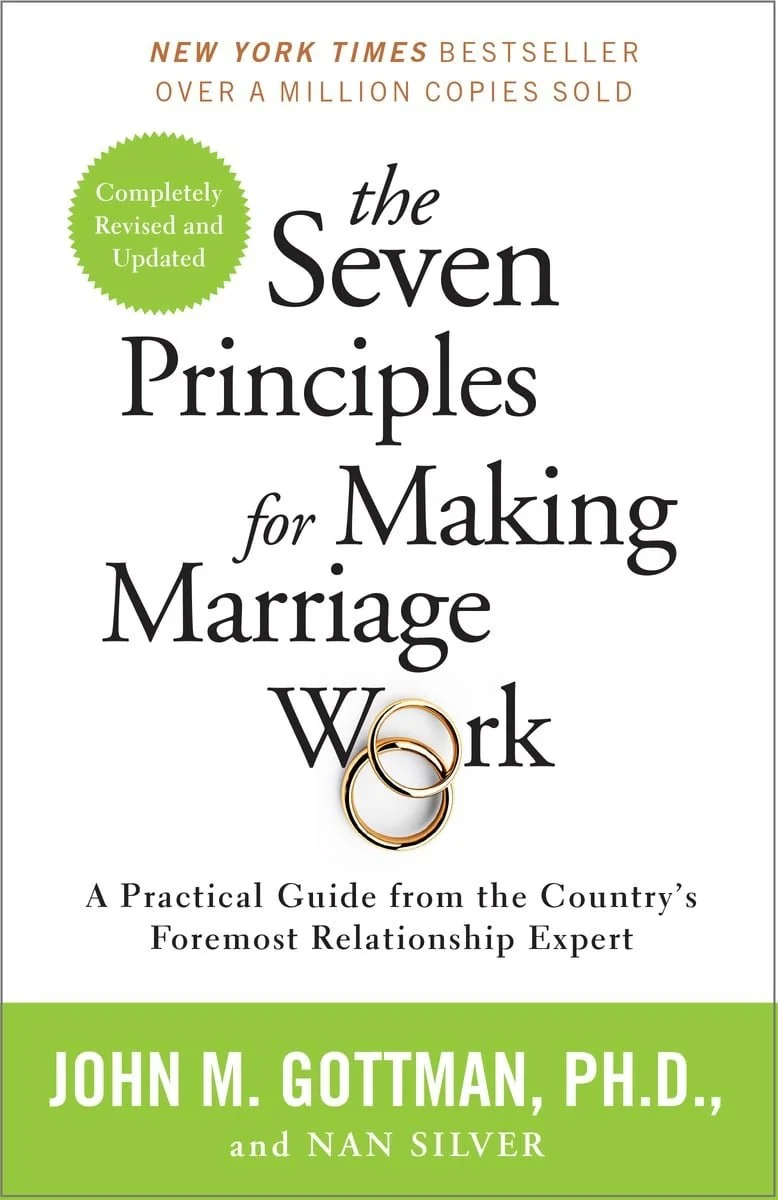
One of John Gottman’s best-known books is The Seven Principles for Making Marriage Work. The book highlights seven principles that can help couples strengthen their relationship: enhance love maps, nurture fondness and admiration, turn toward each other, let your partner influence you, solve your solvable problems, overcome gridlock, and create shared meaning.
These ideas are at the heart of what is known as the Gottman Method.
What Is the Gottman Method?
The Gottman Method gives couples practical ways to better understand each other, communicate more effectively, manage conflict, and strengthen the friendship in their relationship.
The purpose is to improve your relationship by making an effort to know each other’s inner world, including hopes, fears, joys, and stressors. When you intentionally share your life with each other, conflict can become easier to handle because there is a stronger sense of connection underneath it.
Respect and appreciation matter too. When you can recognize your partner’s strengths and continue to show fondness and admiration, conflict becomes less about attacking each other and more about remembering that you are on the same team.
Paying attention to each other also helps couples feel supported and connected, which builds trust and closeness. When trust is strong, it can become easier to listen to your partner’s opinions and allow their perspective to influence you.
Not Every Problem Has a Perfect Solution
One of the most helpful parts of Gottman’s work is understanding that many relationship problems do not have an actual solution.
Once couples realize that, it can take some of the pressure off of thinking, “Wow, my partner and I can never get this right.”
Some problems can be solved through compromise and negotiation. Other problems may continue to come up because they are connected to personality differences, values, beliefs, or individual needs.
When we understand our partner’s dreams and values, it becomes easier to compromise and negotiate because we have a better understanding of what is underneath the disagreement.
When a couple can build rituals, goals, traditions, and a sense of purpose together, they often feel more united and resilient. This is part of what Gottman refers to as creating shared meaning.
The Four Horsemen
Gottman also identified four communication patterns that can become damaging in relationships. These are called the Four Horsemen: criticism, contempt, defensiveness, and stonewalling.
Criticism is an attack on your partner’s character rather than a specific behavior. It often sounds like, “You always...” or “You never...”
Contempt communicates disgust or superiority. The message becomes, “I am better than you, and you are less than me.”
Defensiveness is often a way of protecting yourself by placing the blame back on your partner. It can sound like, “The problem is not me. It is you.”
Stonewalling happens when the listener withdraws from the interaction. They may shut down, turn away, tune out, stop responding, or act busy because they are feeling overwhelmed.
The purpose of learning these patterns is not to start labeling your partner. It is to understand what keeps happening between the two of you.
Once you can recognize a pattern, you have a better chance of changing it.

Why the Seven Principles Matter
The Seven Principles can help couples reduce destructive patterns by strengthening friendship, increasing fondness and admiration, improving communication, and helping partners stay connected through conflict.
Most couples do not become disconnected overnight. It usually happens slowly.
Conversations become more about responsibilities. Stress builds. Small frustrations add up. Couples stop checking in with each other. They may stop noticing the positive and start focusing more on what is going wrong.
The Gottman Method gives couples practical ways to pay attention to those patterns and strengthen the relationship before the distance becomes too great.
Your Relationship Does Not Need to Be on the Rocks
Your relationship does not need to be on the rocks to benefit from learning these skills. You do not have to wait until you are considering divorce, constantly arguing, or feeling completely disconnected.
Relationship wellness can also mean learning how to protect and strengthen what you already have.
After seeing the impact that Gottman Method research and frameworks had in my clinical work with couples, I became certified to facilitate the official Gottman Seven Principles Program. That experience reinforced something I see from the front lines of clinical practice every day: couples need more opportunities to care for their relationship before they reach a crisis point.
I am excited to partner with Jersey Medical Care to help lead an upcoming virtual relationship skills workshop for couples, based on The Seven Principles for Making Marriage Work. This is a psychoeducational program, not couples therapy, and is designed to give couples practical tools they can learn and practice together.
The goal is not to sit in a room and focus on everything that is wrong with your relationship. It is to understand each other better, recognize the patterns you may have fallen into, and practice new ways of connecting.
Sometimes the question does not have to be, “Should I stay or should I go?”
Sometimes the better question is:
“What can we learn that might help us understand each other better and strengthen the relationship we already have?”
If this sparked some curiosity about your own relationship, stay connected with us. We will be sharing more soon about a new virtual relationship education workshop for couples.